

The Best Eats in Kuala Lumpur Are Served on Plastic Bowls and Metal Trays…
Last updated on April 20th, 2026 at 07:07 pm
Being based in Bangkok, Thailand, with so many countries and cities I can choose to visit frequently, here are some reasons why I chose Kuala Lumpur in Malaysia as the place I return to time and time again.
Because Kuala Lumpur always has a special place in my heart. The history, the culture, and the food combined create one of the most fascinating cities in Southeast Asia.
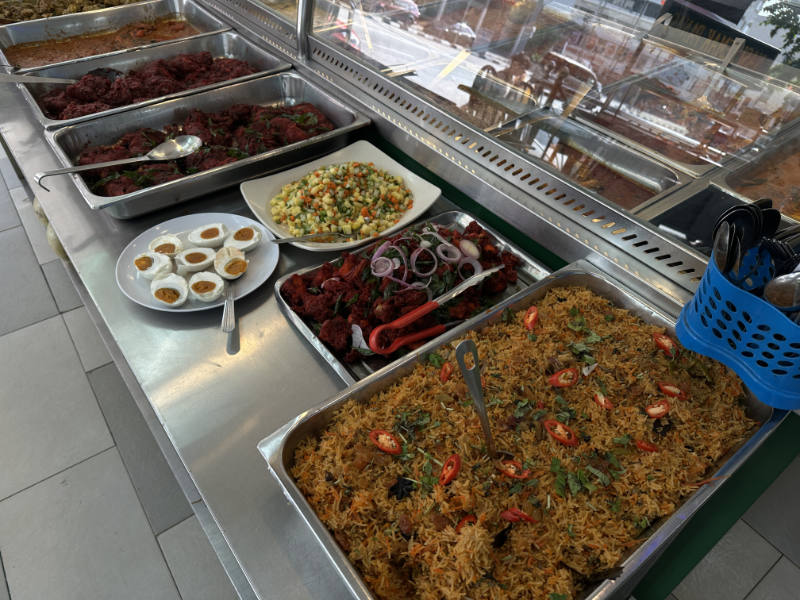
Where else in the world can a guy like me with a big appetite get authentic Chinese, Indian, Arabic, and, of course, Malay cuisine in one location?
And sure, inevitably, foods will get crossed, and the result is simply magic.
I haven’t traveled to India yet. I haven’t even really had the chance to explore China either.
Coming to Malaysia gives me a taste of the best of both worlds.
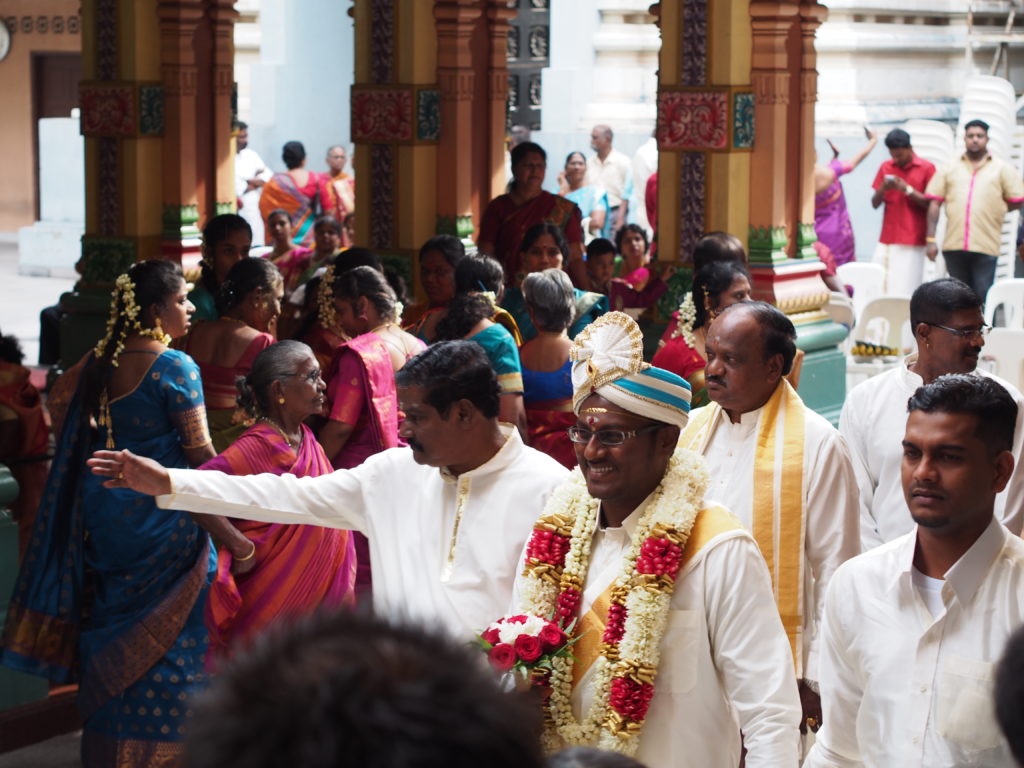
Indigenous Malays, Malay Indians, and Malay Chinese generally get along. Living together and praying together. Not far from each other.
And it all began in the 1800s when the tin mining industry boomed. Hordes of laborers were needed to work the mines. And then some to sustain the booming population.
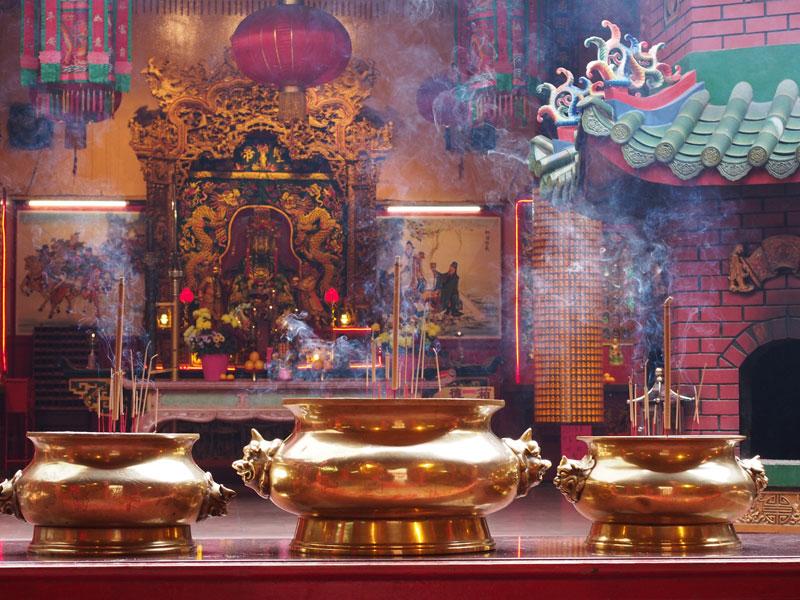
It is common to find Hindu Temples within short walking distance of Chinese Temples. Wherever there are devout worshippers, there are hungry stomachs.
The Food – It’s What Pulls Me Back To Kuala Lumpur Every Year
I know this is going to sound really crazy. Okay, maybe not. If you ask me why I travel to KL every year, multiple times.
My answer is the food.
It’s that simple. When I tell the local Malays that I love their food, their eyes light up. Because they know firsthand what I’m talking about.
Like a secret handshake into a secret club. They too share the sentiment that the food of Malaysia is a national treasure.
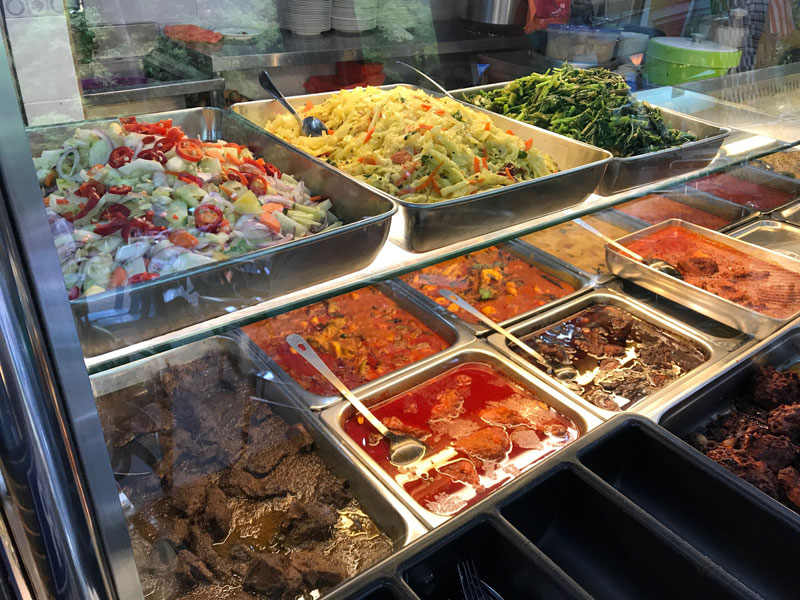
But there’s one particular food that I enjoy. And one style of restaurant that I enjoy very much is serving what I love. And that’s Nasi Kandar.
Intro to Nasi Kandar
This style of restaurant has its origins in South India, which is why you will find a heavy Indian influence. Curries are what I love so much! More about Nasi Kandar below.
These types of eateries remind me of the local pizzerias back in the old days of New York City. It’s where you go to grab some quick bites and chill with friends.
Nasi Kandars are open 24 hours, 7 days a week. The young, the old, and everyone aged between can be seen sitting around, having their meals, and conversing with friends. Smoking in Nasi Kandars is allowed. But have to sit outside.
Now, if you want me to put a finger on what I like to eat the most at my favorite Nasi Kandar joint, I’ll let you know. It’s something that I can’t get enough of and something I eat every single morning and dream about every night before I go to bed in KL.
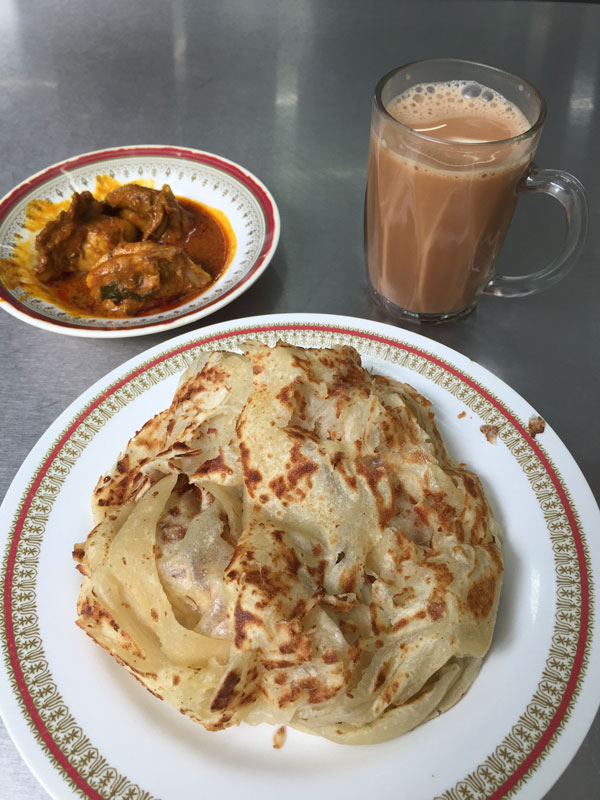
Roti Canai and Chicken Curry
I pride myself on being a simple man with simple tastes, with a huge appetite.
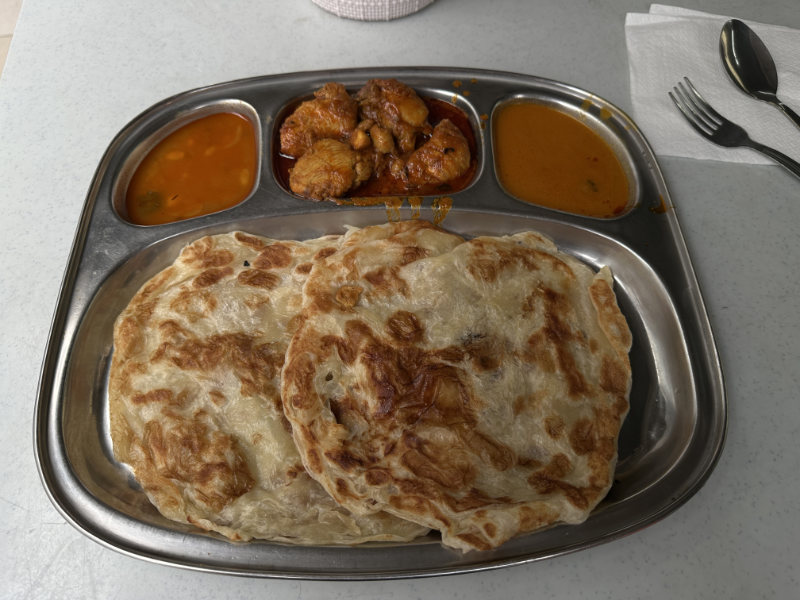
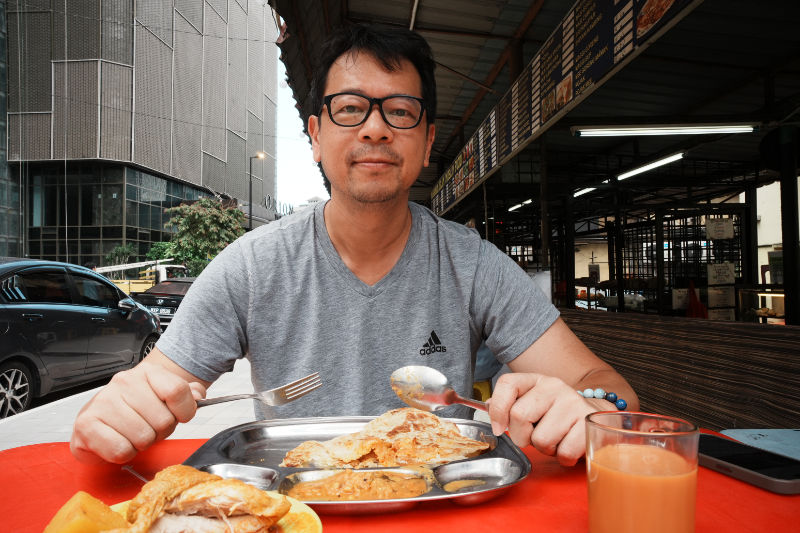
Sometimes I stay in KL for up to a full week. For my entire stay, for breakfast, I eat roti canai and curry chicken. With a cup of hot ginger tea with milk. Even the waiter recognizes me.
As soon as I park my ass on a chair. All I have to say is “the usual, please,” and a nod from the waiter is the confirmation I needed to know. In a few minutes, something yummy is coming to fill my tummy.
Roti is a simple, unleavened flatbread and a popular breakfast choice for the locals who typically eat it with lentil curry called dahl.
Klook.comWhat’s the secret ingredient in Roti? It’s the copious amounts of ghee, an Indian clarified butter. And I prefer my order of roti canai with a side of delicious curry chicken.
The combination is amazing. The roti, when freshly made, is so soft, fluffy, and chewy at the same time. The ghee is the real key. Chicken for some protein and curry spice, combined with the warm roti, is a dream combination.
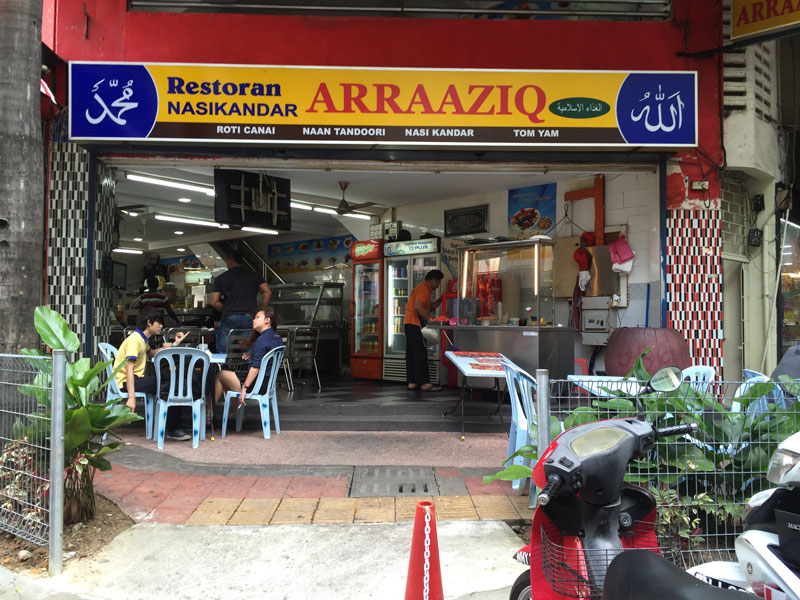
You can find roti canai and curry chicken all over Malaysia, but I always go to Restoran Arraaziq located in the heart of Bukit Bintang, for breakfast.
The Basics of Nasi Kandar Restaurants in Malaysia
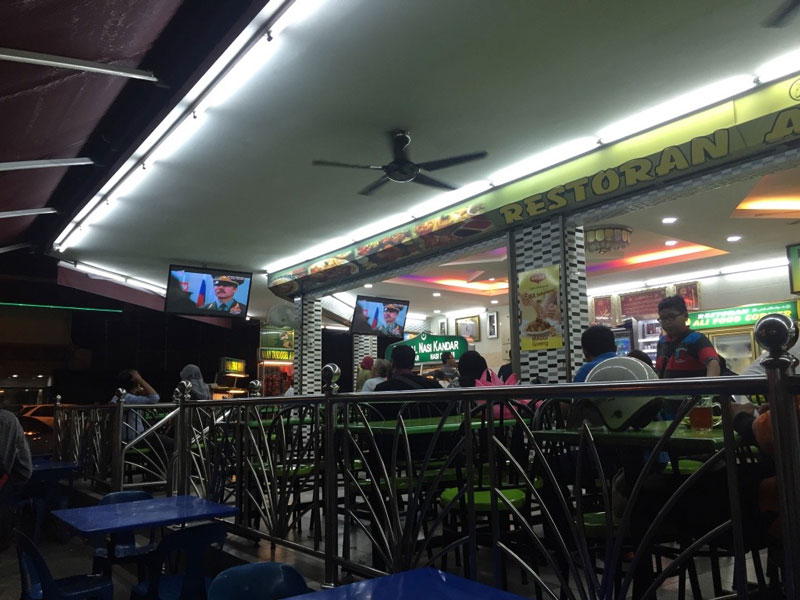
Nasi Kandars are the greasy spoon dives where you’ll find construction and office workers eating together at any time of the day since they are open 24 hours.
Rice dishes at Nasi Kandars cost about 10RM to 15RM, depending on how much food is on your plate. Rotis with curry chicken and a tea beverage will set you back about 10RM.
I’m going to safely assume that Nasi Kandars are cheaper as you head further out of central Kuala Lumpur
So as you can see, if you want cheap but oh so good eats, go to a Nasi Kandar. The portions are generous. The price is very affordable. As I mentioned already, these restaurants are built for the working class.
Nasi means rice, and Kandar means balance. Back in the day, street hawkers used poles balanced on their shoulders with buckets of rice on one end and on the other end an assortment of meats and curry sauces. They served the local population of the time that helped build the city, if not Malaysia.
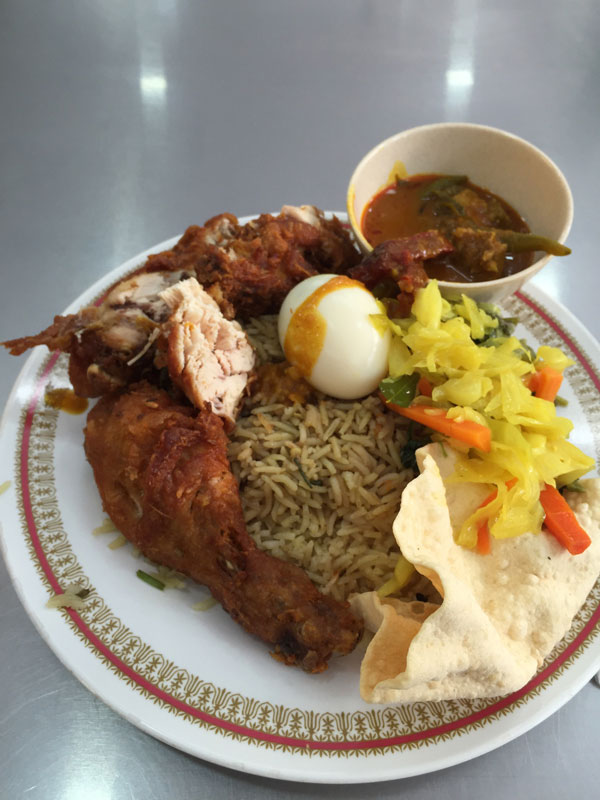
Dining at a Nasi Kandar might be intimidating at first. But down to its basic core, it is simply a fast food restaurant.
There might not be menu boards with prices, but most of the restaurants I’ve been to have menus in English.
Cleanliness could be a concern while dining at these greasy spoons. Most of the food is cooked ahead of time and not heated throughout the day.
Because of the Malaysian weather, food won’t get too cold and stays room temp most of the day.
However, most Nasi Kandar restaurants have microwaves. I’ve eaten at a lot of Nasi Kandar restaurants all around the KL area. I’ve never been sick once.
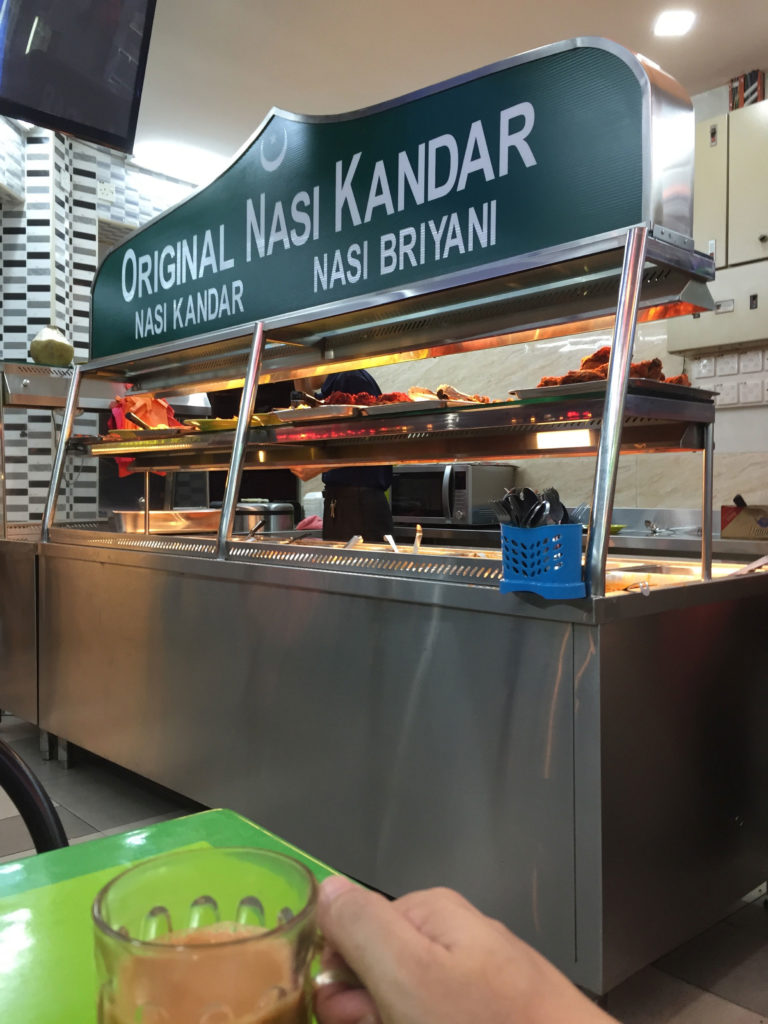
Never seen rodents or roaches at a Nasi Kandar. Oddly enough, not even a fly. I’m in KL mostly around August, November, and February.
I’m sure there are pests like most major cities around the world have, but perhaps these restaurants are good at keeping them at bay.
But if cleanliness is your concern, you can head over to Pavilion Mall’s food court on the basement level. Look for Food Republic. Food will cost more, but it’s a clean place to enjoy this type of food.
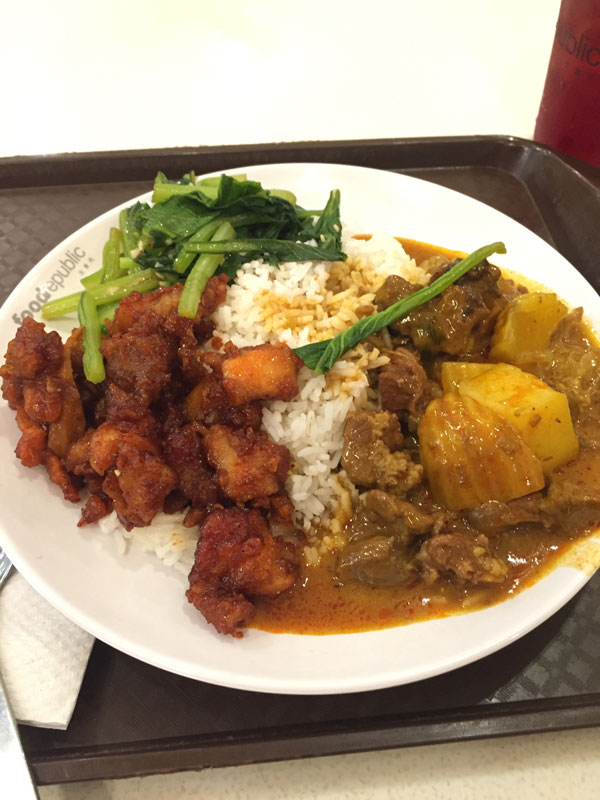
Ordering and Paying for Your Food at a Nasi Kandar
In essence, when it comes to dining at Nasi Kandar, if you’re going for the rice dishes, you either order them at the counter, where you pick what you want. And a server scoops it up for you.
Or you scoop up your own food, typically starting with the rice first. Confused? I thought so. But it’s not complicated. See the photo below.
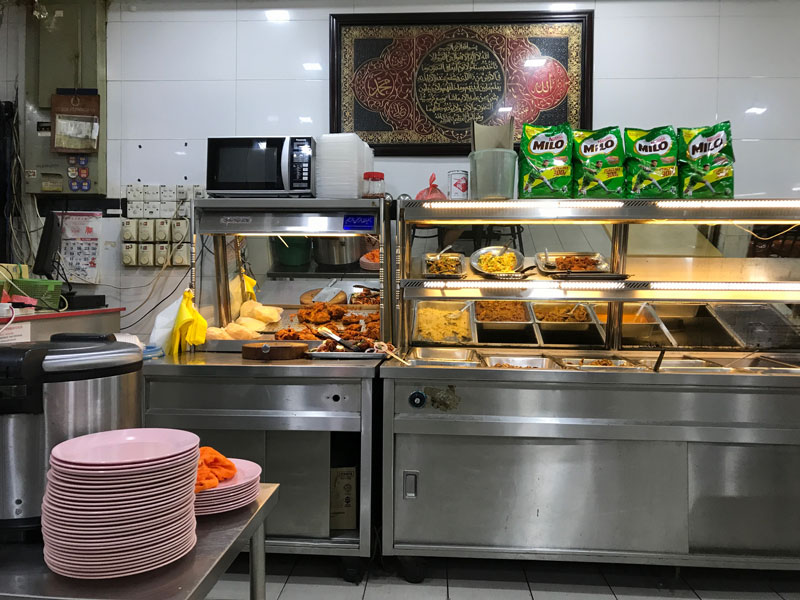
If it’s an open area like the one pictured above, then you can go and scoop up your portions. Some places are self-serve. You can usually tell if the food area is open.
Notice the microwave in the top left corner. Make use of it if you’re scared of getting sick and squirting out from both ends while huddling on the floor in the fetal position of your hotel room.
Some waiters will gladly assist in case you don’t know what’s what. But usually, it’s chicken, beef, mutton, and fish on the bottom shelves.
There’s no pork as these restaurants have Muslim roots. The servers will also help you chop up fried chicken for easy eating.
Vegetables are all on the top shelf. Just in case some strict vegetarian will complain that the meats are fouling the veggies. You all know who you are.
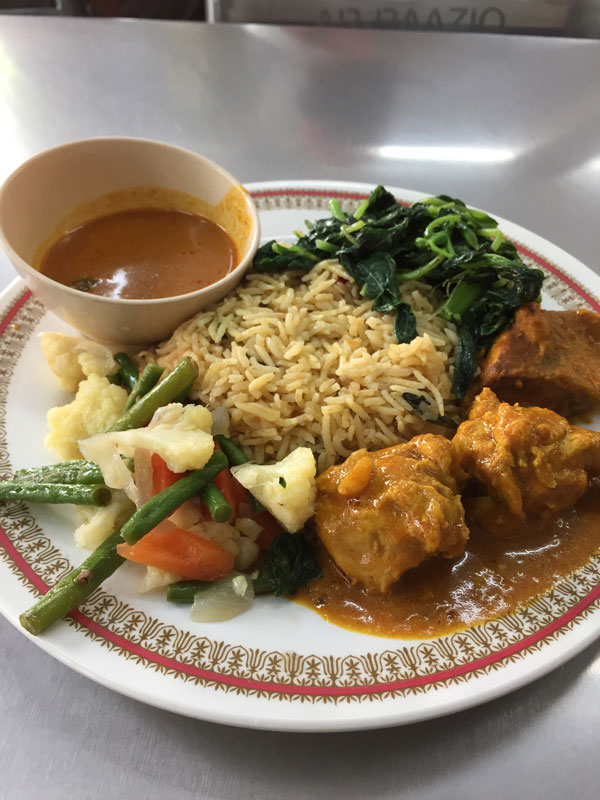
Once you get the hang of self serve, you’ll be fine, like you’re at a buffet. How much to scoop? That’s up to you.
I can honestly tell you to be generous to yourself because, from what I see, the locals seem to pile stuff on their plates like there’s no tomorrow.
It goes without saying, don’t be a jack ass and fill your plate with so much food you can’t finish. And the waiters will charge more per plate if they see you piling up a storm of food.
Once you sit down with your plate of food, a server will ask if you want anything to drink. Sodas, teas, water, smoothies, you name it, they’ve got it.
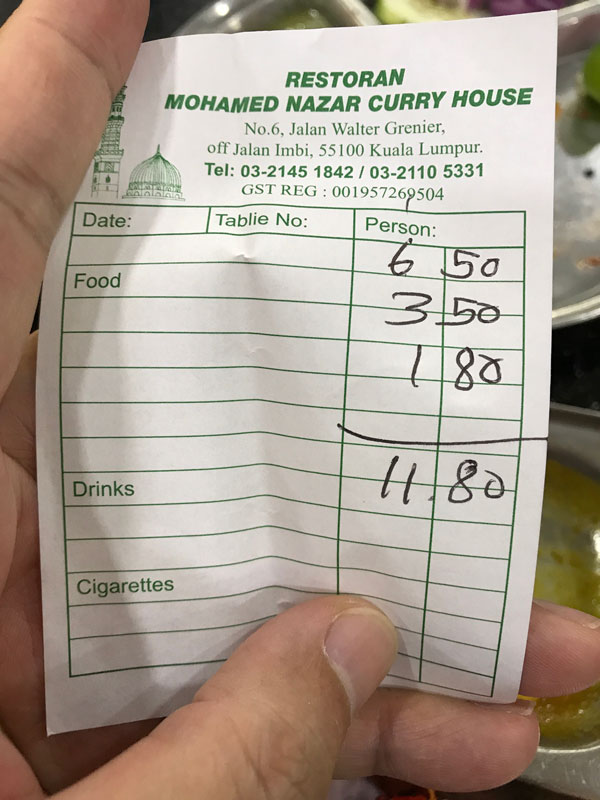
Once your drink is brought to you, a waiter usually writes down the price of your food on a receipt and tucks it under your drink cup or plate.
Now there are more foods served in Nasi Kandars than simply rice, curries, and roti. They also have a mix of Malay and Chinese foods, which are cooked to order. So you can order it from their menus.
You can eat with your hands like the locals mainly do. Or you can eat with the forks and spoons provided on the table.
For the rice dishes and also the roti canai, I use a fork and spoons. If you want to go semi-native, all Nasi Kandars have wash basins to clean your hands.
Nasi Kandars are great restaurants to indulge in naan and tandoori chicken. They serve buttered, garlic, cheese, and, of course, plain naan. And the tandoori chickens are heated right up to order.
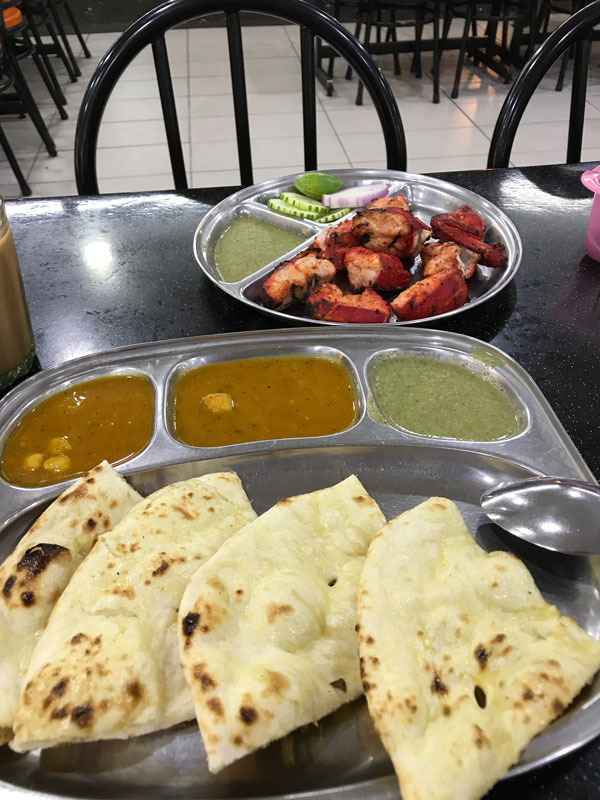
Okay, so I could be considered one sick individual. I eat roti canai with chicken curry every morning. I like eating buttered naan with tandoori chicken just about every night. And don’t forget the hot ginger tea with milk to wash it all down.
Can you blame me? It’s so good. But so bad for my waistline.
The cost is 11.80RM for all 3 items, or about $3 USD bucks. Here’s another dirty little secret.
Although the portions are quite generous, if one night I am particularly hungry, I’ll head to another Nasi Kandar just a short distance from this one.
And order another set of naan and tandoori chicken.
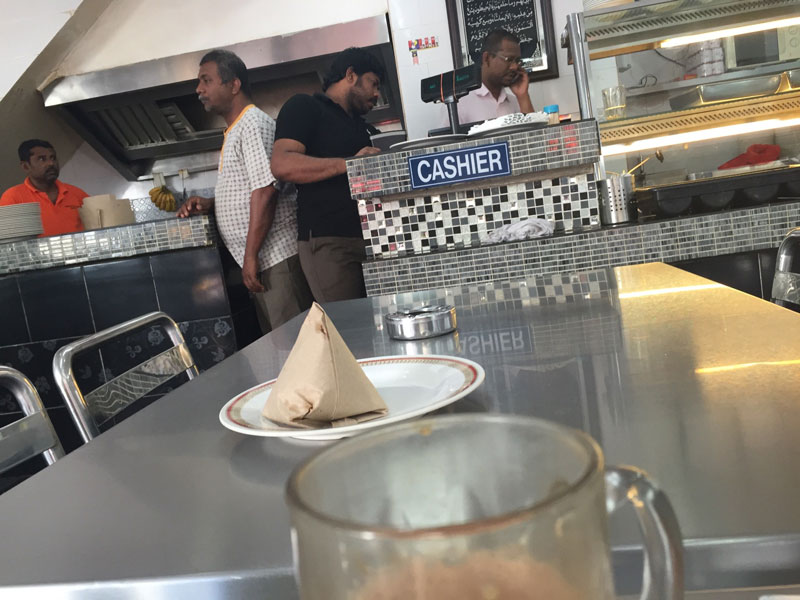
So, pretty much all Nasi Kandar serve the same stuff, but for myself, some tasty naan and tandoori chicken can be found at Restoran Mohamed Nazar Curry House in Bukit Bintang.
The Other Options…
And there are so many. I just touched on the tip of the iceberg of Malaysia’s food culture. But to keep this post short, I recommend trying out Chilli Pan Mee, which I wrote about here.
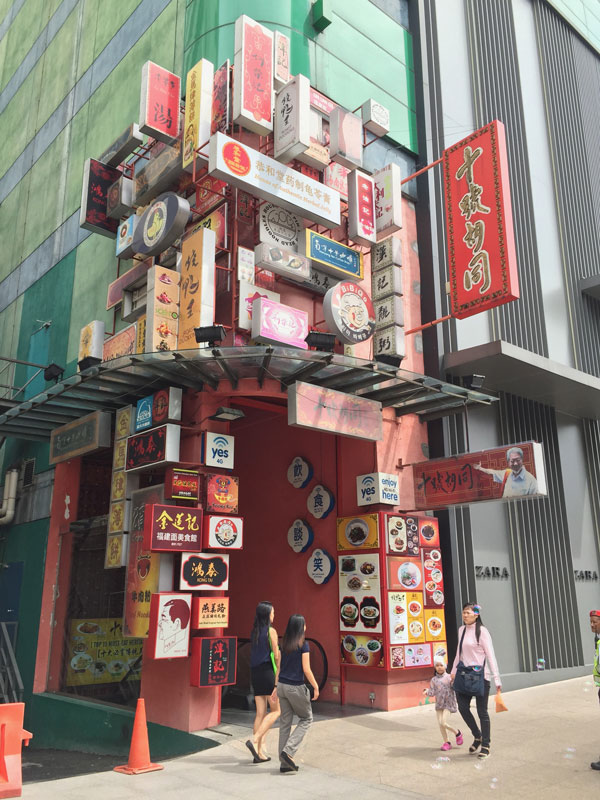
If you’re short on time and don’t want to run around like a headless chicken in search of some good eats in Kuala Lumpur. I suggest heading over to Lot 10 in Bukit Bintang.
I’ve eaten in some fancy restaurants in my lifetime. And I can tell you if I played the “Last Meal Game,” I wouldn’t say it would be had at a fine wine and dine restaurant. With expensive porcelain plates and silverware.
I would choose to have my last meal with food served on cheap plastic bowls. Onto large prison issued aluminum trays.
Eating at a Nasi Kandar – To Sum it All Up
- Nasi Kandar menu prices range from very cheap to cheap. Rice dishes cost about 10RM with a meat and vegetable side. The most I spend is about 15RM, and I’m a big eater.
- Because this is Malaysia, English is spoken. Not all wait staff speak English. But someone working inside will be able to communicate with you.
- For Nasi (rice dishes), choose your selection. Find an empty chair and sit.
- Forks, spoons, and tissues are provided, especially when they know you’re a tourist.
- A waiter will come for a drink order. Once the drink is delivered to you, a total will be written down. If it’s a magnetic card, your total is stored in the card. Don’t lose the handwritten bill or the card.
- To pay, go straight to the cashier. You’ll usually see a sign or simply a cash register. It’s typically cash only. Larger Nasi Kandar restaurants might accept Visa/Mastercard.
- There’s no need to tip at Nasi Kandar restaurants. Unless you really want to.

Leave a Reply